
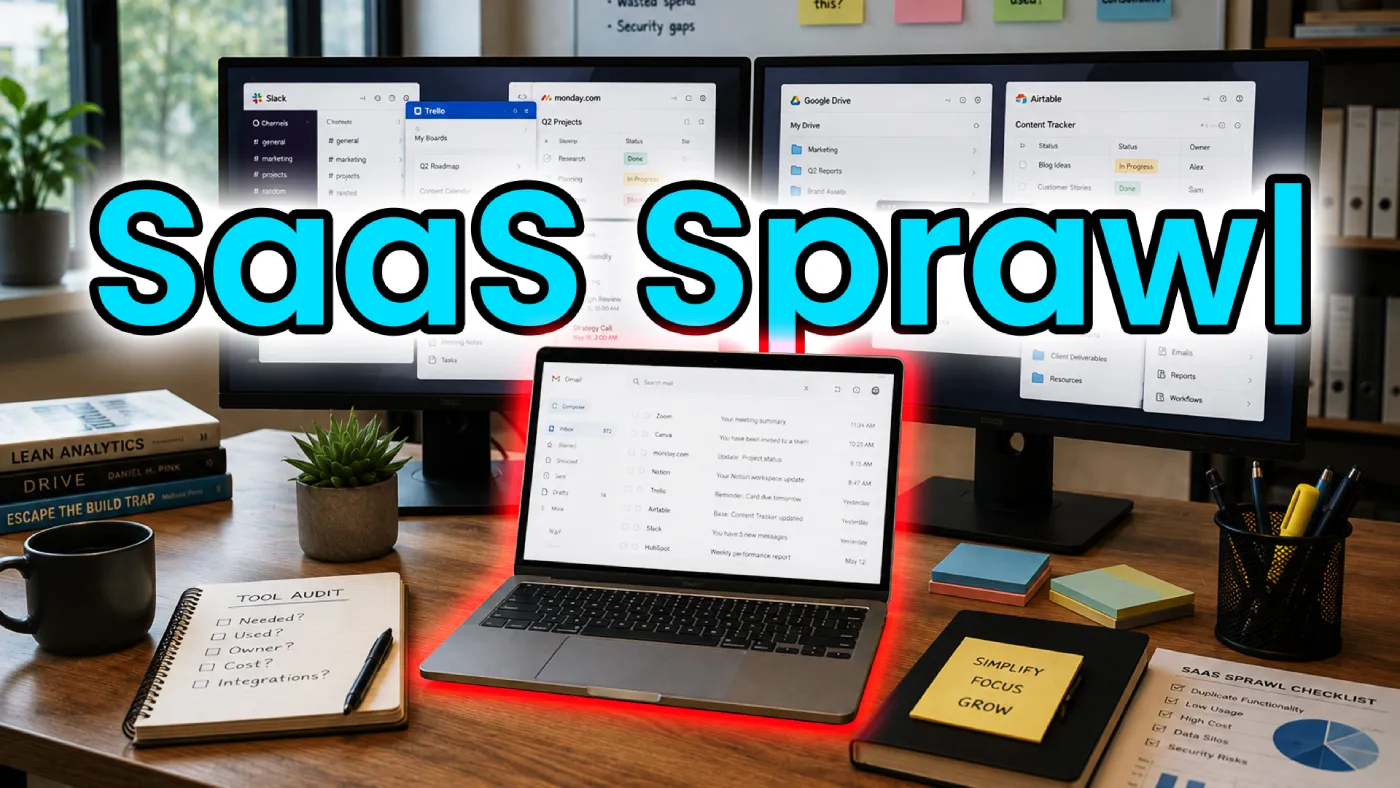
SaaS sprawl is what happens when software subscriptions multiply faster than anyone is tracking them. It usually starts innocuously. Someone on the marketing team signs up for a new tool. Sales adopts a CRM add-on. HR gets an onboarding platform. Each decision makes sense in isolation. Together, and over time, they create a tangle of overlapping tools, redundant costs, and increasingly serious security exposure.
Quick Answer
SaaS sprawl is the unchecked growth of software subscriptions across a business, creating both wasted spend and security exposure.
- Teams sign up for tools without central oversight
- You pay for overlapping apps that do the same job
- Forgotten accounts stay active long after they are needed
- Each unmanaged app is another door into your data
- Getting an inventory is the first step to control
How Bad Is It, Really?
Most business owners would underestimate how many software tools their company is actually running. When subscriptions live on individual credit cards, department expense accounts, or personal accounts employees created for work purposes, visibility disappears quickly.
The financial waste adds up. Unused seats on platforms nobody logs into. Subscriptions for tools that were replaced by something else but never cancelled. Licenses tied to employees who left months ago. None of these charges are large on their own. Collectively they represent real money, and the problem compounds quietly every month.
For the average small business, a software audit often reveals fifteen to thirty percent of spend going toward tools that deliver no active value.
The Security Problem Is Bigger Than the Cost Problem
Financial waste is frustrating. The security exposure is more serious.
Every software platform your business connects to represents a relationship with your data and potentially your systems. When a vendor gets breached, the businesses using that vendor can be affected even if their own systems were never directly targeted. This type of attack, called a supply chain attack, has become the most common way attackers reach small businesses. In 2026, third-party breaches account for nearly half of all reported incidents.Software your team signed up for independently, without any security review, is the most likely to be an undiscovered vulnerability.
Getting Control of the Problem
The first step is inventory. You cannot manage what you cannot see. A software audit identifies every tool your team is using, who approved it, what data it accesses, and whether it is still actively needed.
From there, consolidate where you can. Cancel anything that has not been actively used in thirty days or more. Remove access for departed employees. Put a simple approval process in place for new subscriptions so the list does not quietly rebuild itself.
Making It a Habit
A one-time cleanup is valuable. Turning it into a quarterly habit is what keeps the problem from coming back. Your managed IT provider can help you maintain an ongoing inventory and flag new tools that appear outside of the approved list. That visibility is one of the simplest and most effective ways to reduce both your cost exposure and your security risk at the same time.
Frequently Asked Questions
SaaS sprawl is the uncontrolled spread of software subscriptions across a business, often signed up for by individual teams without central oversight.
Every app with access to your data is a potential entry point. Forgotten or unmanaged accounts widen your attack surface without anyone noticing.
Start with an inventory of every tool in use, cancel duplicates and unused accounts, and put a simple approval process in place for new apps.
Overlapping and forgotten subscriptions waste money, and the same unmanaged accounts create security gaps. Fixing it solves both at once.
A software audit often finds significant savings and security improvements in a single session. If you have never done one, or if it has been more than a year, we can help. Reach out to get started.

Recent Posts


How can we help?
Whether you need immediate help with an IT issue or want to discuss your long-term IT strategy, our team is here to help.
Call us at (804) 544-1048 or complete the form below and we'll help in any way we can.