For most of the history of cybersecurity, attacks came at businesses directly. A hacker tried to break into your network, trick your employees into clicking something malicious, or steal credentials through a phishing email. Your defenses were built around that model. That model is increasingly being outmaneuvered by a different type of attack entirely.
Quick Answer
A supply chain attack reaches you through software or vendors you already trust, using their access to get into your systems.
- Attackers compromise a trusted vendor or software update
- Their access becomes a path into every downstream customer
- You can be exposed even if your own defenses are strong
- The tools and partners you rely on widen your attack surface
- Knowing who has access is the starting point for control
What a Supply Chain Attack Is
A supply chain attack does not come at you directly. Instead of targeting your business, attackers go after the companies whose software and services you already use and trust. They compromise a software vendor, insert malicious code into an update that gets distributed to that vendor’s customers, or use a service provider’s legitimate access to your systems as a backdoor.
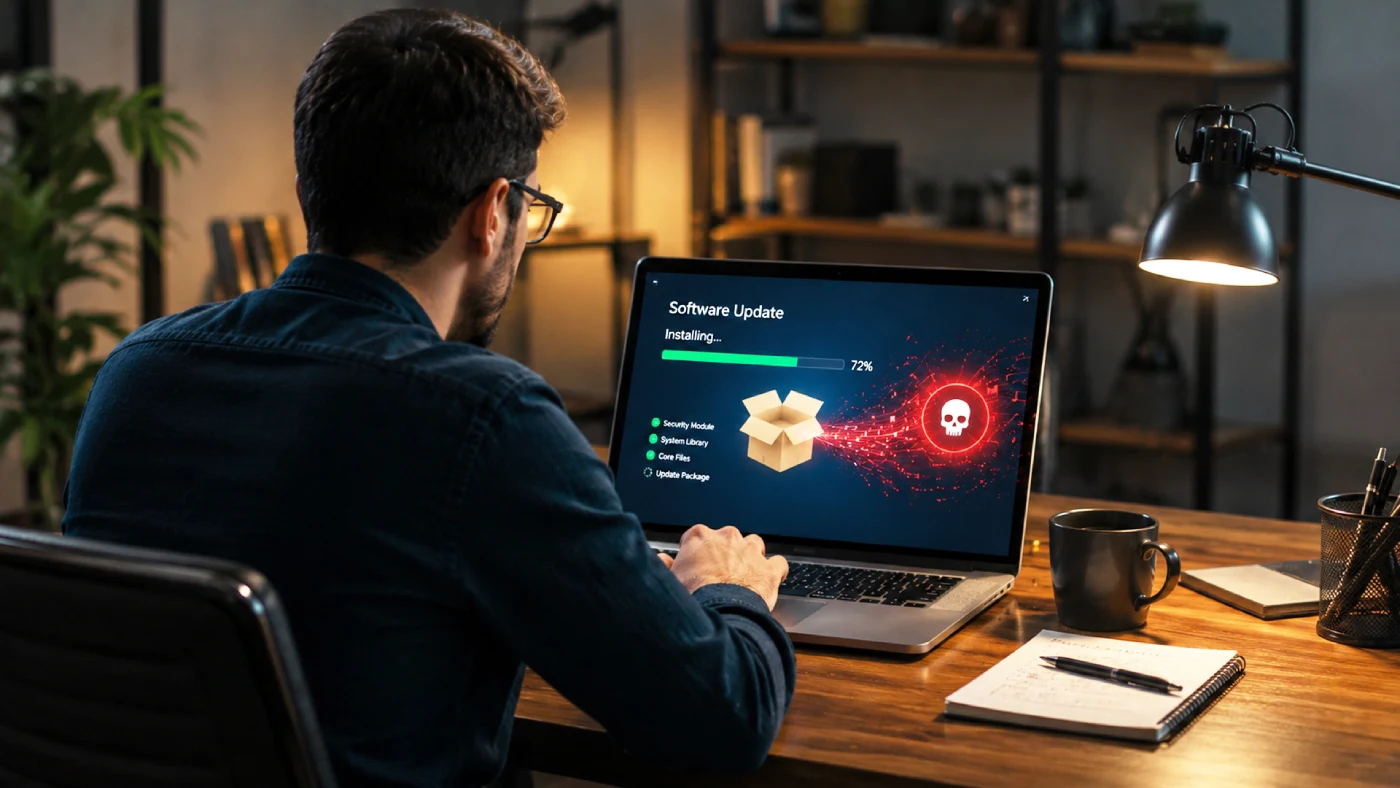
You install what looks like a normal software update from a company you have used for years. The update runs automatically because you trust the source. But embedded in that update is malicious code that now has access to your systems with no obvious signs of an intrusion.
Why This Threat Is Growing
Supply chain attacks have overtaken traditional direct intrusions as the most significant global cyber threat in 2026. The reason is scale.
A skilled attacker who compromises one widely used software vendor can potentially reach hundreds or thousands of that vendor’s customers simultaneously. The return on investment for attacking a supplier is far higher than attacking each customer individually. And the attack arrives through a trusted channel, which means it bypasses many of the defenses businesses have built specifically to catch untrusted inputs.
Third-party breaches now account for nearly half of all reported security incidents, according to the Verizon 2026 Data Breach Investigations Report.
What Small Businesses Can Do
The starting point is visibility. You need to know what software and services have access to your systems and data. That list is often longer than people expect, particularly once you account for integrations, browser extensions, and tools that connect to your cloud accounts.
From there, the principle of least access applies to vendors as much as it does to employees. Third-party tools should have access only to what they genuinely need to do their job. Monitoring for unusual activity in your environment is the most reliable early warning system. A managed security provider who watches your network for anomalous behavior can catch supply chain compromises significantly faster than waiting for obvious symptoms.
The Bottom Line
Supply chain attacks do not require your business to make a mistake. You can do everything right and still be affected through a trusted vendor. The response is not to stop using vendors but to choose them with appropriate care, limit their access thoughtfully, and maintain the monitoring capability to detect unusual activity quickly when it occurs.
Supply chain risk starts with knowing who has access to your systems. We help businesses map their vendor exposure and build monitoring capabilities that catch problems early. Get in touch to start that conversation.
Frequently Asked Questions
It is an attack that reaches your business through a trusted vendor, software provider, or update, using their legitimate access to get to you.
Because they bypass your own defenses. When a trusted vendor is compromised, their access into your systems is inherited by the attacker.
Know which vendors and tools have access to your data, keep software updated, and prefer partners who can demonstrate their own security practices.
Not entirely, but you can limit exposure by managing vendor access, monitoring for unusual activity, and maintaining tested backups for recovery.
Ready to take the next step? Our team helps small and mid-sized businesses put the right systems and protections in place before problems start. Reach out to schedule a conversation.

Recent Posts


How can we help?
Whether you need immediate help with an IT issue or want to discuss your long-term IT strategy, our team is here to help.
Call us at (804) 544-1048 or complete the form below and we'll help in any way we can.